
MicroLogicSentinel—EndpointProtection&EDR
Traditional antivirus is no longer enough. MicroLogic Sentinel uses AI-powered behavioural detection and automated response to stop ransomware and zero-day attacks on every device in your organisation — before damage is done.
If You Run a Business, You Need EDR — Not Just Antivirus
Most businesses still rely on internet security software — the kind that comes bundled with a laptop or purchased from a retail store. It does a decent job blocking old, well-known threats. But today's cybercriminals are not using old tricks.
Think of traditional antivirus like a security guard with a photo album of known criminals. If someone on the list walks in, they get stopped. But if a criminal is not in the album — or disguises themselves — they walk straight through.
EDR is more like a security camera system with an intelligent analyst watching it. Instead of checking faces against a list, it watches how everyone behaves. If someone starts acting suspiciously — even someone who has never been seen before — it raises the alarm and locks the door immediately.
What modern ransomware actually does
- 1
A staff member receives a legitimate-looking email and clicks a link — or downloads what appears to be an invoice.
- 2
Malicious code runs silently in the background. Traditional antivirus sees nothing because this particular code has never been seen before.
- 3
Over the next few hours or days, the attacker quietly moves through your network — copying files, gaining admin access.
- 4
Then they lock everything: files, servers, backups. A ransom demand appears. Your business grinds to a halt.
- 5
Average cost to a Singapore SME: downtime, ransom payment, recovery, and reputational damage — often exceeding S$50,000.
At step 2, EDR would have flagged the unusual behaviour and isolated the device — before any damage spread.
Internet Security vs EDR — Side by Side
Here is a simple comparison to help you understand the difference.
| What we're comparing | Traditional Internet Security | MicroLogic Sentinel (EDR) |
|---|---|---|
| What it protects against | Known viruses and malware it has seen before | Known AND unknown threats — including brand-new ransomware |
| How it detects threats | Matches files against a list of known bad signatures | Watches how programs behave — flags anything acting suspiciously |
| Zero-day attacks | Cannot detect — no signature exists yet | Detected by unusual behaviour, even on day one of the attack |
| Ransomware protection | May miss new ransomware variants entirely | Detects encryption activity in real time and stops it automatically |
| What happens after detection | Alerts you or quarantines the file | Automatically isolates the infected device to stop the spread |
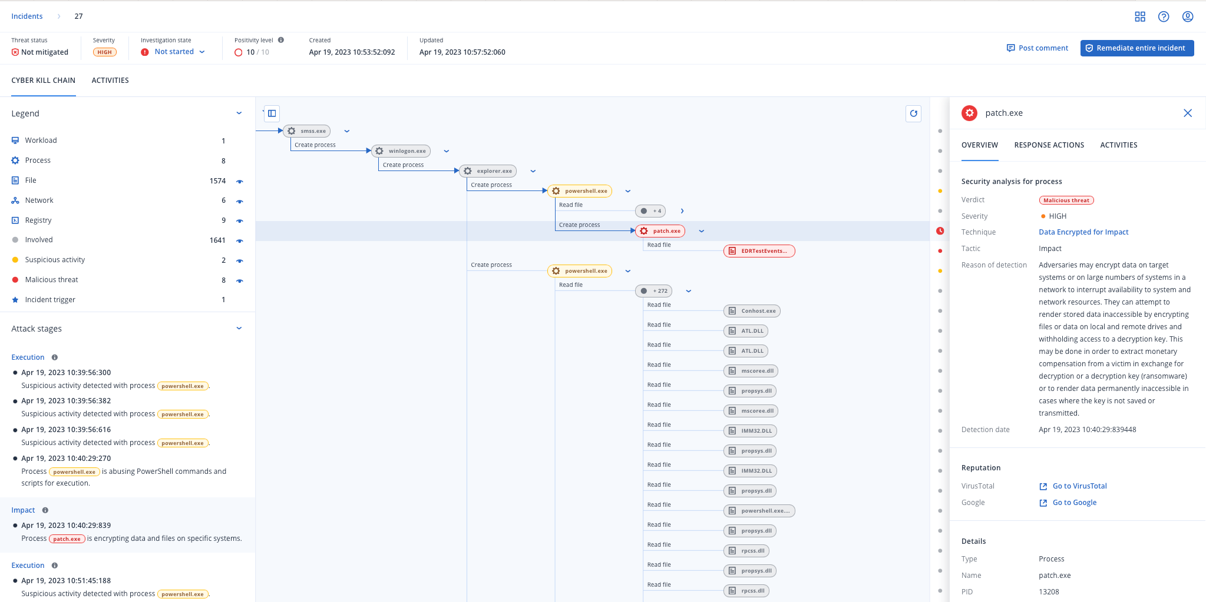
| Investigation | Limited — tells you a threat was found, not much else | Full timeline — shows exactly what happened, when, and on which device |
| Recovery | Manual restore from backup | Ransomware rollback — files restored to pre-attack state automatically |
| Required for Cyber Essentials (SS 712)? | No longer sufficient | Yes — meets the Malware Protection requirement |
Not sure if your current setup is sufficient? Sign up for a 30-day free trial and we will tell you exactly where you stand.
Why EDR Has Replaced Antivirus
Traditional antivirus relies on signature matching — it can only detect threats it has already seen. Modern ransomware, zero-day exploits, and living-off-the-land (LotL) attacks are specifically engineered to bypass signature-based tools. EDR (Endpoint Detection and Response) uses AI-driven behavioural analysis, machine learning, and real-time threat intelligence to detect attacks based on what they do — not what they look like. MicroLogic Sentinel delivers this protection across every endpoint in your business, and is required for Cyber Essentials (SS 712) certification.
MicroLogic Sentinel Features
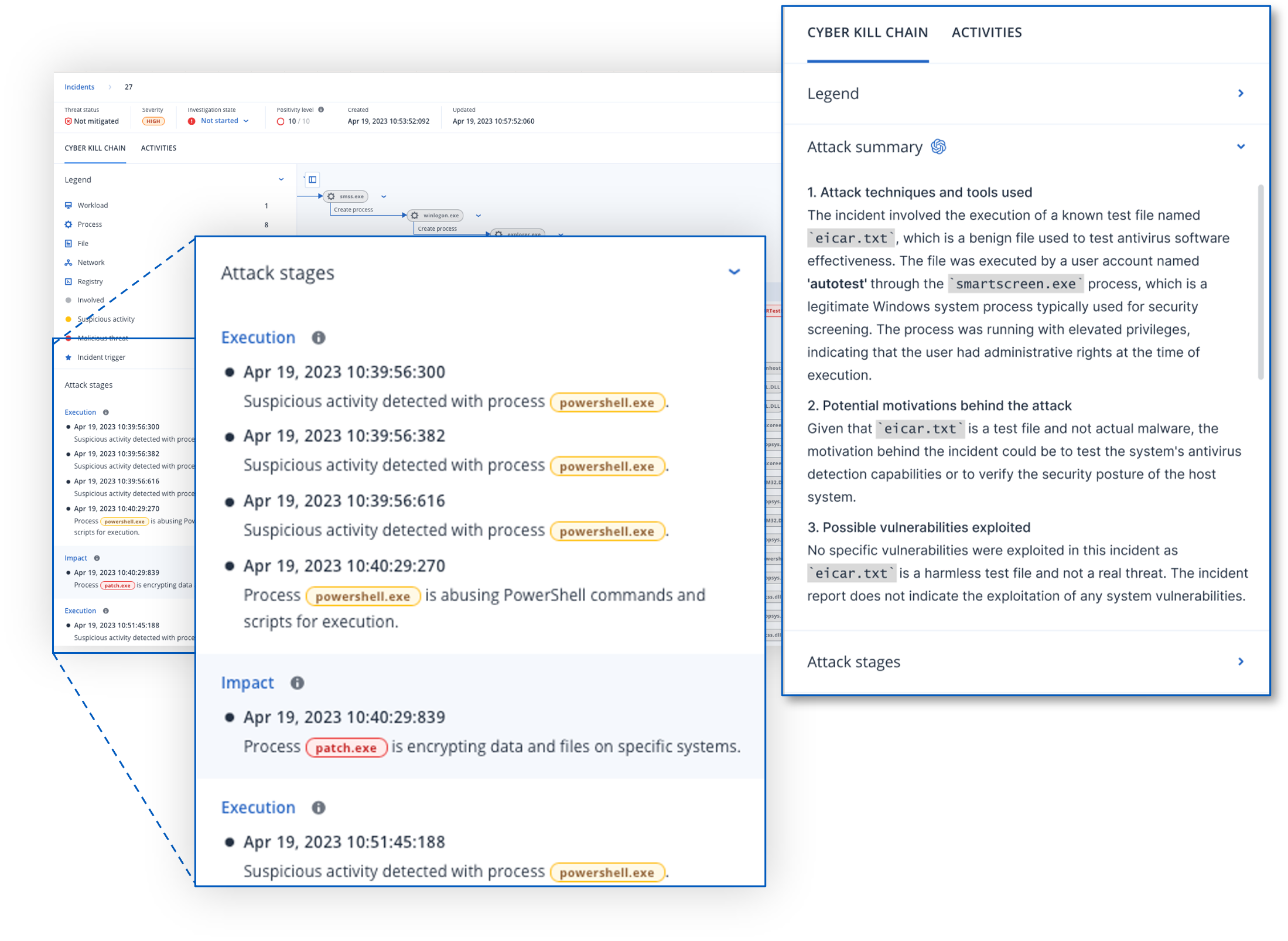
AI Behavioural Threat Detection
MicroLogic Sentinel continuously analyses endpoint behaviour to detect ransomware, fileless malware, and novel attack techniques that signature tools miss entirely.
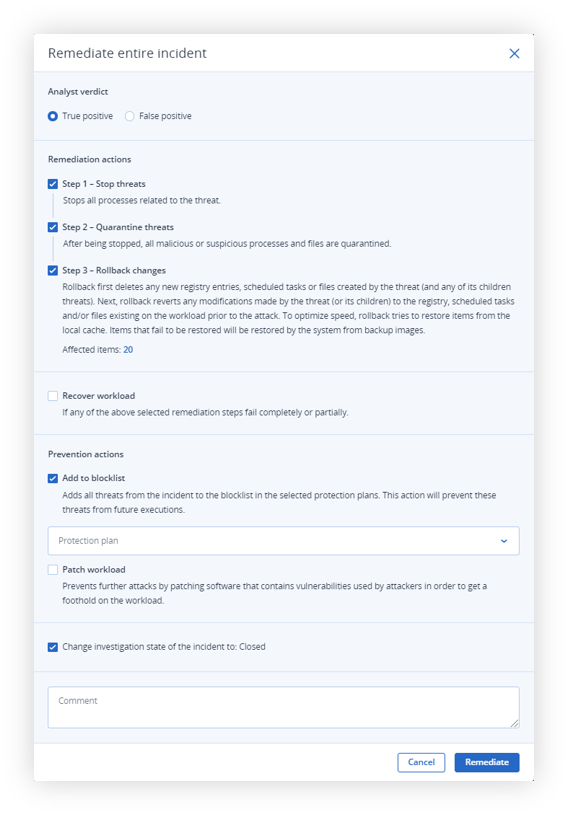
Ransomware Rollback
Unique rollback capability restores files encrypted by ransomware to their pre-attack state — minimising downtime even when an attack slips through.
Full Forensic Timeline
Complete attack timeline reconstruction — root cause, patient zero, lateral movement, and all files affected — so you know exactly what happened and can close the gap.
Automated Isolation & Response
When a threat is confirmed, MicroLogic Sentinel automatically isolates the compromised endpoint — stopping ransomware lateral spread in seconds, before it reaches your critical systems.
All Devices Covered
Windows, macOS, and Linux endpoints — includes servers, workstations, and laptops.
How It Works
Deploy
Lightweight MicroLogic Sentinel agent deployed to all endpoints — minimal performance impact, remote installation, no downtime required.
Tune
Configure detection policies, behavioural baselines, exclusions, and automated response rules tailored to your environment.
24/7 Monitoring
24/7 monitoring of Sentinel alerts with human analyst triage — critical alerts actioned within 1 hour.
Respond
Immediate containment of confirmed threats — endpoint isolation, forensic investigation, rollback, and recovery guidance.
Powered By Award-Winning Endpoint Protection
MicroLogic Sentinel is recognised by the world's leading independent security testing organisations.












Why MicroLogic?
- MicroLogic Sentinel — proprietary EDR platform built for Singapore SMEs
- Ransomware rollback: restore encrypted files without paying the ransom
- EDR is required for Cyber Essentials (SS 712) — we ensure your deployment meets certification requirements
- Human SOC analysts review every alert — no false-positive fatigue
- Covers Windows, macOS, and Linux — servers, workstations, and laptops
Frequently Asked Questions
What is the difference between antivirus and EDR?
What is the ransomware rollback feature?
Is EDR required for Cyber Essentials Singapore?
Will MicroLogic Sentinel slow down our computers?
How much does MicroLogic Sentinel cost?
Related Services
Protect Every Endpoint with MicroLogic Sentinel
Don't rely on antivirus for ransomware protection. Deploy MicroLogic Sentinel and get AI-powered EDR with ransomware rollback across your entire organisation.
Sign up A Free 30 Days Trial
Start your 30-day free trial of MicroLogic Sentinel — no credit card required.